Artisan Capacity Building & Livelihoods

Maximizing socio-economic upliftment by transitioning informal ragpickers and refugee women into skilled craftswomen, backed by fair wages, technical education, and global market linkages.

From Vulnerable Waste Pickers to Confident Makers

To build sustainable artisan micro-enterprises, Conserve identifies motivated community groups living in informal settlements and provides a structured mobilization and training curriculum.

We train individuals in safe plastic processing, pattern design, industrial sewing, and business literacy, backing them with our international wholesale distribution channels. All surplus generated from product sales directly finances artisan health insurance, equipment, and workshop scaling.
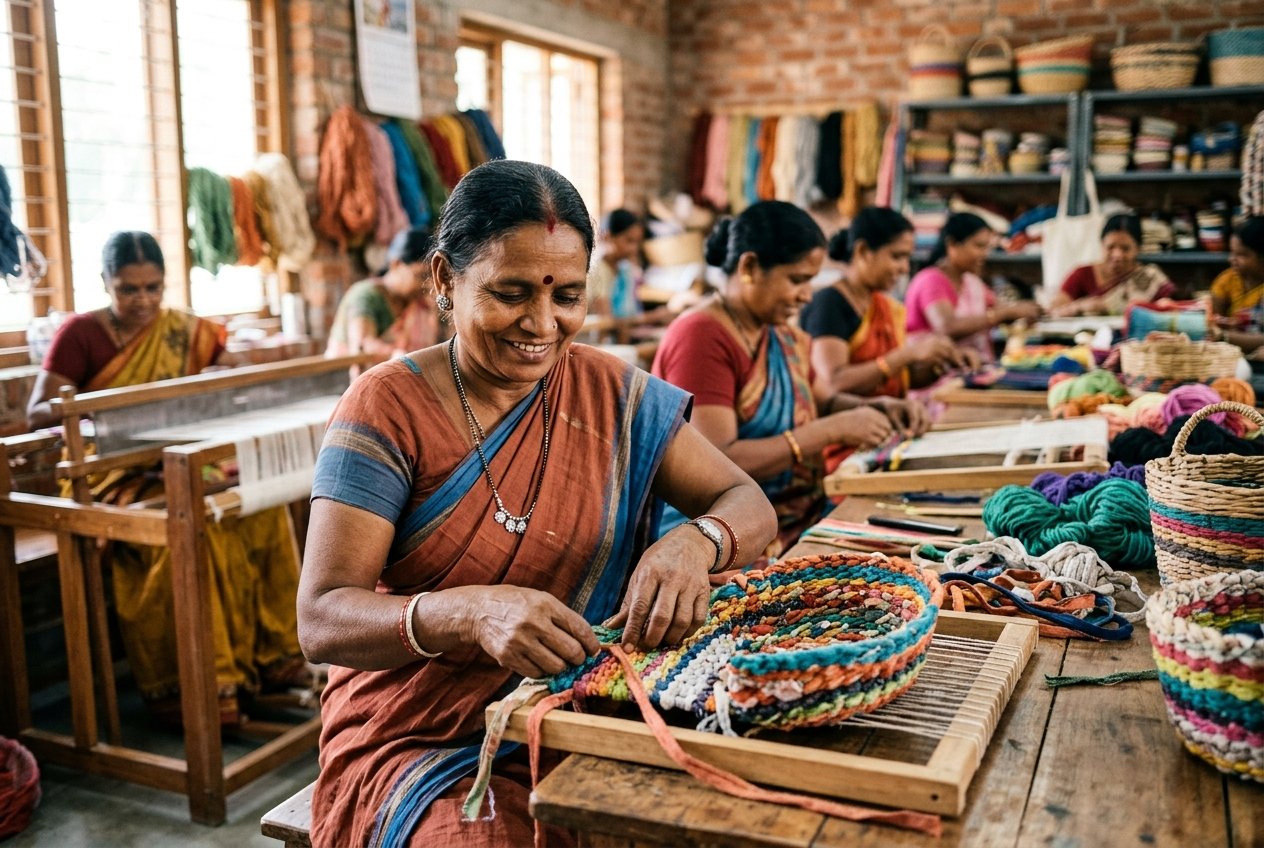
Artisan women weaving and stitching in workshop

Targeted Community Programs

Providing long-term stability and social inclusion across three core vulnerable demographics.

PROGRAM 01

Local Craft Artisans

Conserve trains local craftspeople in diverse traditional and modern handicrafts—including stitching, embroidery, loom weaving, crocheting, and hand-block printing.

We provide formal education on Fair Trade labor policies, bank account operations, and design consistency, ensuring artisans earn living wages in safe, ergonomic ateliers.

PROGRAM 02

Grassroots Waste Recyclers

Informal waste pickers manage the bulk of India's recyclables yet face hazardous conditions and exploitation in urban landfills.

For over 15 years, Conserve has provided up to two years of intensive training in our patented HRP technology, transforming ragpickers into skilled material technicians and workshop managers.

PROGRAM 03

Refugee Livelihoods (Akseer)

In partnership with UNHCR's Swavlamban (Self-Reliance for Refugees) project, Conserve trained a cohort of 25 Afghani refugee women settled in low-income districts of Delhi.

Equipped with tailoring and micro-enterprise skills, these women successfully launched their own brand, Akseer, creating bespoke pieces for North Indian fashion boutiques.

How Our Training Model Works

A proven, four-phase pathway from economic vulnerability to dignified vocational independence.

PHASE 01

Identification

Partnering with urban slum colonies and refugee settlements to identify motivated individuals seeking dignified work.

PHASE 02

Technical Mastery

Hands-on training in plastic washing, color sorting, thermal lamination, pattern cutting, and industrial stitching.

PHASE 03

Fair Trade & Health

Financial literacy, bank account setup, fair wage guarantees, health insurance, and workplace safety protocols.

PHASE 04

Market Linkage

Connecting finished products to global department stores, boutique retailers, and corporate ESG procurement programs.